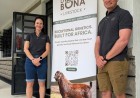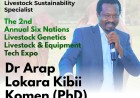

Embryo Plus CEO Dr. Morne De La Rey Masterclass At The Six Nations Livestock Expo
Embryo Plus Masterclass At The Six Nations Livestock Genetics & Equipment Expo

Embryo Plus Masterclass At The Six Nations Livestock Genetics & Equipment Expo

Q: What inspired Embryo Plus to participate at the Six Nations Livestock Genetics & Equipment Expo, and how does this align with your company's mission?
A: Embryo Plus has been working across South Africa, Kenya and Zimbabwe for more than four decades, and East Africa has always been a region where we've seen enormous appetite for better genetics but limited access to the technology that delivers them. The Six Nations Expo brings together breeders and farmers from Kenya, Tanzania, Uganda, Somalia, South Sudan and Ethiopia under one roof, which is exactly the kind of regional platform we want to be part of. Our mission from day one has been to make world-class reproductive technology — embryo transfer, IVF, semen genetics — available to farmers who wouldn't otherwise have access to it, so an expo built specifically around genetics adoption and regional collaboration is a natural fit for us.
Q: How do you see this event influencing the adoption of advanced livestock genetics in the region?
A: Events like this compress years of awareness-building into a couple of days. When a farmer can stand next to a breeder who has already used embryo transfer to lift calving rates or improve production in their herd, that does more to shift attitudes than any brochure. We expect the expo to accelerate three things at once: farmers seeing proven genetics in person, breeders and equipment suppliers building the regional supply relationships that make ongoing access possible, and policymakers hearing directly about the market-access and infrastructure gaps that are still slowing adoption down.
AI in Livestock Genetics
Q: How is Artificial Intelligence currently being applied in your embryo technology processes?
A: We use data and image-based tools at several points in the process — from grading embryos under the microscope more consistently, to using genomic and pedigree data to estimate breeding values and predict which matings are most likely to produce the traits a herd needs. AI-assisted analysis is also increasingly useful in flagging embryo viability earlier and in helping our technicians manage the sheer volume of data that comes out of a modern IVF and embryo transfer programme, so decisions are based on patterns across thousands of records rather than a single technician's judgement on the day.
Q: Can you share an example of how AI has improved accuracy, efficiency, or success rates in livestock breeding?
A: Using EBV’s or BLUP values plays consistently a role in selecting the best genetics and improve production of beef and dairy herds. In general terms, the industry has seen AI-based image analysis cut the time and subjectivity involved in embryo grading, and genomic prediction tools shorten the number of generations it takes to fix a desirable trait in a herd — turning a process that used to rely heavily on visual assessment and years of pedigree records into something far more data-driven and repeatable.
Q: What role do you see AI playing in predicting and enhancing livestock traits for regional farmers?
A: The real opportunity for this region is using AI to translate large genetic datasets into decisions an individual farmer can actually act on — which bull or embryo is likely to produce offspring suited to local heat, disease pressure or feed conditions, not just which one performed well somewhere else in the world. As more herd, climate and performance data gets collected across East and Southern Africa, AI tools should let us tailor genetic recommendations to local conditions rather than importing genetics blind and hoping they perform.
Embryo Technology Impact
Q: For farmers in this region, what are the most immediate benefits of adopting embryo transfer and related technologies?
A: The most immediate benefit is speed: embryo transfer lets a farmer multiply the genetics of their very best females many times over in a single season, rather than waiting years for that improvement to filter through naturally. That means faster herd upgrading, more calves from proven, high-performing animals, and a much quicker route to the productivity gains — higher weaning weights, better fertility, stronger milk yields — that directly affect a farmer's income.
Q: How does embryo technology help address challenges like climate resilience, disease resistance, and productivity?
A: Embryo transfer and IVF let us combine the traits a herd actually needs — heat tolerance, tick and disease resistance, feed efficiency — with proven productivity, without having to wait generations for conventional breeding to get there. By selecting donor and sire genetics suited to local climate and disease pressure and multiplying them through embryo transfer, we can help farmers build herds that are both more resilient and more productive at the same time, rather than trading one off against the other.
Q: Could you explain how your technology makes high-quality genetics more accessible to smallholder farmers?
A: Historically, elite genetics were locked up in a small number of stud herds that smallholders had no realistic way to buy into. Embryo transfer changes that economics: a smallholder doesn't need to buy an expensive animal outright, they can access proven genetics through a single embryo or a straw of semen implanted in an animal they already own. Combined with regional distribution and training — which is exactly what we do through our South African and Kenyan operations — that puts genetics that used to be out of reach within a smallholder's budget.
Sustainability & Future Outlook
Q: How does your work contribute to sustainable farming practices and food security in the region?
A: Better genetics is one of the most sustainable levers in agriculture, because it improves output without requiring more land, more water or more animals. A cow that produces more milk or a calf that reaches market weight faster on the same feed and grazing directly reduces the environmental footprint per unit of food produced. Over a 45-year history that now includes conservation work with endangered species like sable antelope and white rhino, we've seen firsthand how reproductive technology can support both commercial food security and broader biodiversity goals.
Q: What innovations in embryo technology are you most excited about in the next 5–10 years?
A: We're excited about genomic selection becoming cheaper and more accessible at farm level, about AI-assisted embryo grading and predictive analytics becoming standard rather than specialist tools, and about in vitro production techniques continuing to improve so that more farmers — not just large studs — can multiply their best animals' genetics affordably. We'd also like to see better cold-chain and logistics infrastructure across the region, because the technology is only as useful as the region's ability to transport and store genetic material reliably.
Q: How do you plan to balance technological advancement with affordability for farmers?
A: Our approach has always been to prove new technology in controlled, higher-value settings first — including our conservation and stud work — and then bring the cost down as the technique matures, so it reaches commercial and smallholder farmers rather than staying a niche service. Regional partnerships, training local technicians instead of flying in specialists, and working through events like this one to build local capacity and supply chains are all part of keeping advanced genetics affordable rather than exclusive.
Farmer Engagement & Education
Q: What steps is Embryo Plus taking to train and support farmers in using these technologies effectively?
A: We run hands-on training for farmers and technicians across our regions, provide ongoing technical support once genetics are in the field, and use platforms like the Six Nations Expo specifically to demonstrate techniques in person rather than just describe them. Our goal is always to leave a farmer or a local technician more capable than they were before, not to create a dependency on us for every step of the process.
Q: How do you address scepticism or hesitation from farmers unfamiliar with AI-driven livestock solutions?
A: We start with results, not theory — showing a farmer a herd that has already benefited from these techniques does more than any explanation of the science. We're also upfront that AI and advanced genetics are tools that support a farmer's own judgement and local knowledge, not a replacement for it. Mentorship programmes for emerging farmers, like the ones built into the Six Nations Expo, and ongoing on-the-ground support after the sale are what turn early scepticism into confident adoption over time.